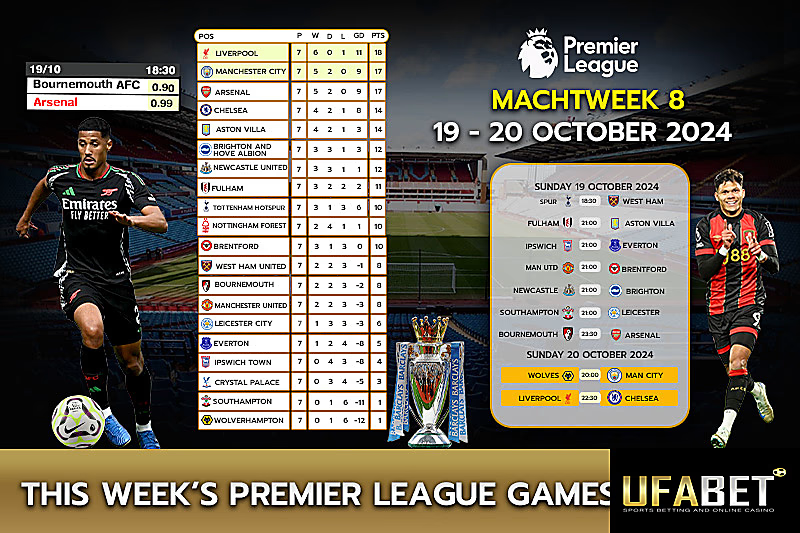
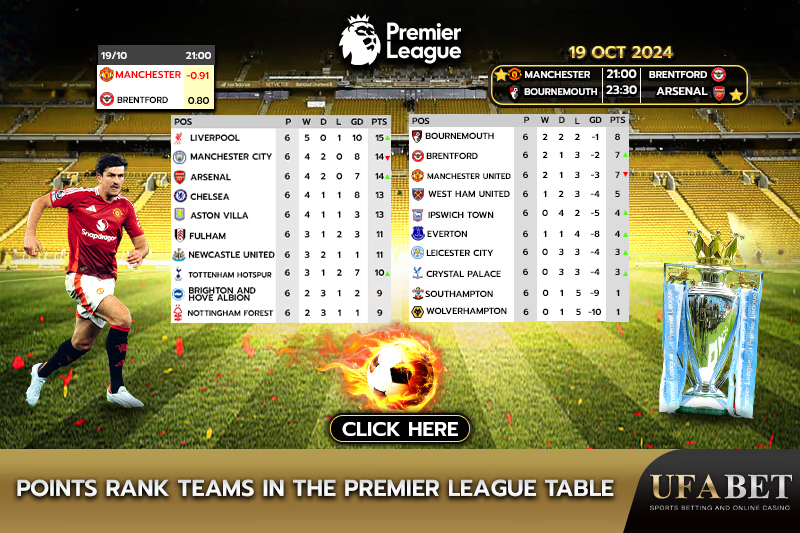
The 2026/27 Premier League table shows the current position of all 20 clubs based on matches played, results, goals, and points. The Premier League standings provide a clear overview of the current league hierarchy, including the teams competing near the top and the clubs currently facing pressure near the bottom. The Premier League 2026/27 campaign remains in its early stages, so positions can change quickly after each round of fixtures. TheEPL table shows wins, draws, losses, goals scored, and goal difference for a complete view of each club's current performance.
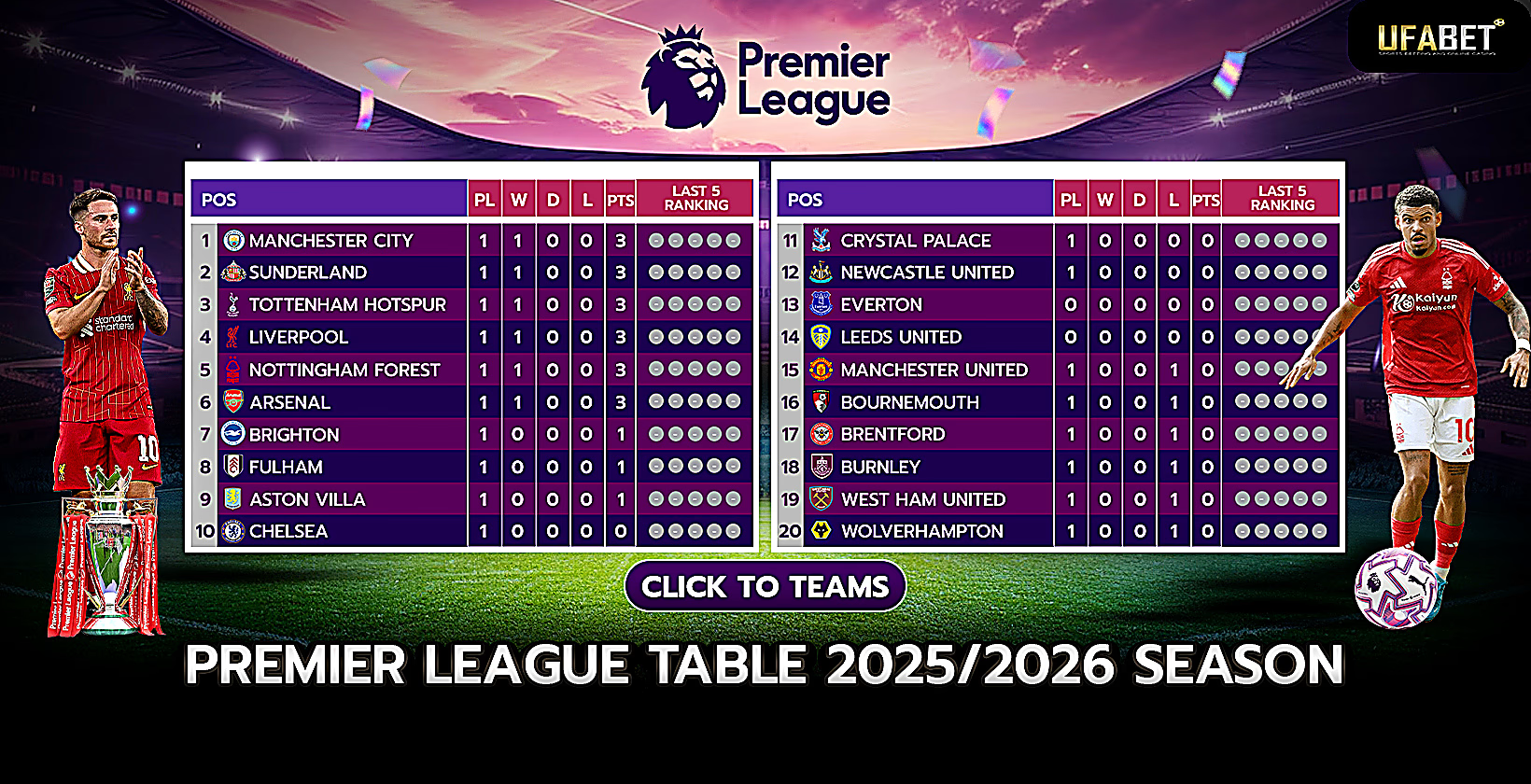
The Premier League standings and table are shown in the table below.
The Premier League table tracks the performance of all 20 clubs throughout the season. Each team's position reflects points earned from wins and draws, alongside goal difference and goals scored. The standings help readers follow the title race, European qualification places, and relegation battle. Regular updates provide a current view of the English Premier League.
To read the Premier League table, follow the nine steps below.
Check Position. The position shows where each club ranks in the current standings.
Check Matches Played. Matches played shows how many league fixtures each club has completed.
Check Wins. Wins count matches won, with every victory worth 3 points.
Check Draws. Draws count matches ending level, with each draw worth 1 point.
Check Losses. Losses count matches lost without adding points to the club's total.
Check Goals For. Goals for shows the total number of goals scored by each club.
Check Goals Against. Goals against shows the total number of goals conceded.
Check Points. Points determine league position, followed by goal difference and goals scored when clubs share the same points total.
How Important Is the Premier League Table for Betting?
The Premier League table is highly important for betting because league position provides a direct view of recent results and season performance. Points, wins, losses, goals scored, and goal difference help bettors compare teams before assessing a fixture. A table position also provides context for title races, European qualification battles, and relegation fights. Home and away records add further detail because a club's full position does not always reflect its performance at a specific venue. Goal difference provides useful evidence when teams have equal points. Premier League rules use goal difference as the first tiebreaker when clubs finish level on points, followed by goals scored and further tiebreakers.) The table should support match analysis rather than determine a betting decision alone. Recent form, injuries, fixtures, home advantage, and head-to-head results provide additional context for Football Betting.
What do the Columns in the Premier League Standings Mean?
The columns in the Premier League standings show each club's matches played, wins, draws, losses, goals scored, goals conceded, goal difference, and points. MP represents matches played, while W, D, and L represent wins, draws, and losses. GF represents goals scored, while GA represents goals conceded. GD represents the difference between goals scored and goals conceded. Pts represents the total points earned by each club. Each column provides a different measure of league performance and helps explain why clubs occupy their current positions.
How are Premier League Teams Ranked in the Table?
Premier League teams are ranked first by total points earned during the season. A win earns 3 points, a draw earns 1 point, and a loss earns 0 points. Each club plays 38 matches, with points from every fixture contributing to the final league position. The club with the highest points total finishes first and wins the Premier League title.
Goal difference separates teams that finish level on points, followed by goals scored. Head-to-head points and away goals in head-to-head matches provide further tiebreakers at the end of the season when required. League position determines the champion, European qualification places, and relegation positions. The ranking system therefore reflects both match results and scoring performance across the full Premier League campaign.
How are Points Calculated in the Premier League Standings?
Premier League points are calculated from the result of every league match. A victory earns 3 points, a draw earns 1 point, and a defeat earns 0 points. Each club plays 38 matches during a full season, giving a maximum possible total of 114 points. Points accumulate throughout the campaign and determine the primary order of the league table. The club with the highest points total at the end of the season wins the Premier League title.
A club earns 3 points from every victory regardless of the scoreline. A draw awards 1 point to both clubs, while a defeat adds no points to the league total. When clubs finish with equal points, goal difference becomes the first tiebreaker, followed by goals scored and further head-to-head criteria. Points therefore provide the foundation for league rankings, while tiebreakers separate clubs with identical totals.
What Happens When Premier League Teams Have the Same Number of Points?
Premier League teams with the same number of points are separated by goal difference first. Goal difference equals goals scored minus goals conceded across league matches. A higher goal difference places a club above another club with the same points total. Goals scored provide the next tiebreaker when teams also have the same goal difference.
Head-to-head points separate clubs that remain level on points, goal difference, and goals scored at the end of the season. Away goals scored in head-to-head matches provide the next tiebreaker. A neutral-site playoff provides the final method when clubs competing for the title, European qualification, or survival remain inseparable after the listed criteria.
What Determines Premier League Standings and Team Positions?
Premier League standings are determined primarily by points earned from match results. A win awards 3 points, a draw awards 1 point, and a loss awards 0 points. Clubs with more points rank higher in the table, while goal difference and goals scored separate clubs with equal points. The standings also reflect each club's matches played, wins, draws, losses, goals scored, goals conceded, and goal difference.
Team positions provide a running view of the league throughout the season. Clubs near the top compete for the Premier League title and European qualification, while clubs near the bottom face relegation pressure. Final positions depend on the complete season record and the official tie-breaking rules.
How do Wins, Draws, and Losses Affect the Premier League Table?
Wins, draws, and losses directly determine how many points a club receives from each match. A win adds 3 points, a draw adds 1 point, and a loss adds 0 points. A club with more wins therefore has a stronger opportunity to move higher in the table, provided other results support the position.
Results also affect a club's goal difference because goals scored and conceded are recorded after every fixture. A run of wins increases points and often improves goal difference, while defeats provide no points and often reduce goal difference. Draws provide fewer points but still help a club maintain its position during difficult fixture periods.
How does Goal Difference Affect Premier League Rankings?
Goal difference affects Premier League rankings when two or more clubs finish level on points. The calculation subtracts goals conceded from goals scored across league matches. A positive goal difference indicates that a club has scored more goals than it has conceded, while a negative figure shows the opposite.
Goal difference therefore provides an important ranking advantage when points are equal. A club with +20 goal difference ranks above a club with +10 when both teams have the same points. The rule has also decided the Premier League title, with Manchester City winning the 2011/12 championship on goal difference after finishing level with Manchester United on 89 points.
How are Goals Scored and Goals Conceded Used in the EPL Standings?
Goals scored and goals conceded form the basis of goal difference in the EPL standings. Goals scored represent the total goals a club has recorded, while goals conceded represent the total goals allowed. Subtracting goals conceded from goals scored produces the goal difference shown in the table.
Goals scored also serve as the second tiebreaker when clubs have identical points and goal difference. A club with more goals scored ranks higher when both previous measures are equal. The statistic therefore measures attacking output while also helping determine league positions during close races.
What Happens When EPL Teams Remain Level on Goal Difference?
EPL teams that remain level on points and goal difference are separated by goals scored. A club with more goals scored ranks higher when both teams have identical points and goal difference. Head-to-head points then provide the next tiebreaker when the clubs remain level. Away goals scored in head-to-head matches provide the next criterion. A one-off playoff at a neutral venue serves as the final tiebreaker for certain decisive positions when clubs remain inseparable after the earlier criteria. The Premier League has not required such a playoff since its formation.
Premier League Table 2026/2027 Statistics
The 2026/27 Premier League standings provide early indicators of team performance after 3 matches. Manchester City and Arsenal lead the table with 9 points from 3 wins each. Manchester City lead the goals category with 7 goals, while Arsenal have conceded only 1 goal. Hull City sit third with 7 points after 2 wins and 1 draw.
Premier League Table 2026/2027 Statistics are shown in the table below.
Which Team Has the Most Points in the Premier League?
Manchester City and Arsenal have the most points in the 2026/27 Premier League standings, with 9 points each after 3 matches. Both clubs have recorded 3 wins and 0 losses, giving each team a perfect start to the campaign. Manchester City currently ranks first because of goal difference, with +5 compared with Arsenal's +5, while goals scored provide the next ranking factor. The 9-point total reflects strong early performance because every Premier League victory provides 3 points. Manchester City have scored 7 goals and conceded 2, while Arsenal have scored 6 and conceded 1. Both clubs therefore combine perfect records with positive goal differences, placing them at the top of the table after the opening 3 matchweeks.
Which Team Has the Most Wins?
Manchester City and Arsenal have the most wins in the 2026/27 Premier League standings, with 3 victories each after the opening 3 matches. Both clubs have maintained perfect records with 3 wins, 0 draws, and 0 losses. Manchester City recorded wins against Bournemouth, Crystal Palace, and Coventry City, while Arsenal defeated Coventry City, Aston Villa, and Chelsea. The 3 wins give Manchester City and Arsenal 9 points each, placing both clubs at the top of the early Premier League standings. Manchester City have scored 7 goals and conceded 2, while Arsenal have scored 6 and conceded 1. The perfect records show strong early consistency, with both clubs collecting the maximum available points from their opening fixtures.
Which Team Has the Most Goals?
Chelsea and Brighton have scored the most goals in the 2026/27 Premier League standings, with 8 goals each after 3 matches. Chelsea have scored 3 against Fulham, 4 against Brighton, and 1 against Arsenal. Brighton recorded 4 against Aston Villa, 3 against Chelsea, and 1 against Leeds United.)
Manchester City rank next with 7 goals from their opening 3 fixtures, while Arsenal have scored 6. Goal totals provide a useful measure of attacking output, while goal difference accounts for both goals scored and conceded. Chelsea's 8 goals have produced a +1 goal difference, while Brighton's 8 goals have resulted in a +4 goal difference. Goal difference serves as the first tiebreaker when clubs finish level on points.
Which Team Has the Best Goal Difference?
Manchester City and Arsenal have the best goal difference in the 2026/27 Premier League standings, with +5 each after 3 matches. Manchester City have scored 7 goals and conceded 2, while Arsenal have scored 6 and conceded 1. Both clubs also hold perfect records with 9 points from 3 wins.
Goal difference measures the gap between goals scored and goals conceded. A +5 figure reflects strong attacking output alongside effective defensive performances. Goal difference also serves as the first tiebreaker when clubs finish level on points, making the statistic important when teams compete for higher positions, European qualification, or survival.
Which Team Has the Fewest Losses?
Eight teams have the fewest losses in the 2026/27 Premier League standings, with 0 defeats after 3 matches. Manchester City, Arsenal, Hull City, Brentford, Liverpool, Newcastle United, Everton, and Leeds United have all avoided defeat during the opening matchweeks. An unbeaten record reflects consistency across the opening fixtures. Manchester City and Arsenal lead the table with 9 points from 3 wins, while Hull City have 7 points from 2 wins and 1 draw.
Brentford, Liverpool, Newcastle United, Everton, and Leeds United have combined wins and draws to remain unbeaten. Newcastle United and Everton each have 5 points, while Brentford, Liverpool, and Leeds United also have 5 points. Remaining unbeaten helps clubs maintain stronger league positions during the opening stages.
Which Team Is at the Bottom of the Premier League Table?
Coventry City sit at the bottom of the 2026/27 Premier League table after 3 matches, with 0 points from 3 defeats. The promoted club has scored 0 goals and conceded 5, giving Coventry a -5 goal difference. Coventry's early position reflects a difficult start after returning to the Premier League. The club lost to Arsenal, Hull City, and Manchester City across the opening 3 matchweeks. Three consecutive defeats leave Coventry without points, while their -5 goal difference also places them among the teams with the weakest defensive records.
Coventry's position also highlights the importance of collecting points early in the season. Arsenal won the opening fixture 1-0, Hull City secured a 1-0 victory in Matchweek 2, and Manchester City followed with a 1-0 win in Matchweek 3. Coventry therefore remain without a goal after 3 matches, while their next fixture is against Brighton on September 13.
How do Current Form and Recent Results Affect Premier League Standings?
Current form and recent results directly affect Premier League standings because every completed match changes a club's points total, goal difference, and record. A sequence of wins moves a team upward, while repeated defeats increase pressure near the relegation places. Consecutive positive results also create separation from nearby clubs when rivals fail to collect similar points. The official Premier League table provides current standings and form information for the 2026/27 season.
Recent results also show whether a club is maintaining momentum during a title, European qualification, or relegation battle. A club with several wins in succession builds a stronger points total, while repeated draws produce slower progress despite avoiding defeats. Goal difference also changes with every match, adding another factor when clubs finish level on points. Reviewing recent form alongside league position provides clearer context for changes in the Premier League standings.
How do Home and Away Results Impact Team Rankings?
Home and away results affect Premier League rankings through the same points system. A home win and an away win each provide 3 points, while a draw provides 1 point and a loss provides 0 points. Every club plays each opponent once at home and once away, giving each team 38 league matches across the season.
Separate home and away records also provide useful performance context. A club with strong home results and weaker away results could hold a different competitive profile from a team with more balanced results across both venues. Points from both venues combine into one league total, while goal difference and other tiebreakers determine positions when clubs finish level on points.
How do Goals Scored and Conceded Influence League Position?
Goals scored and goals conceded determine a club's goal difference, which serves as the first tiebreaker when teams finish level on points. Goal difference is calculated by subtracting goals conceded from goals scored. A club scoring more goals while limiting goals against therefore builds a stronger goal difference and gains an advantage over rivals with the same points total.
A higher goal difference provides a ranking advantage when points are equal. Goals scored also serve as the next tiebreaker after goal difference, making attacking output relevant to close positions in the table. A strong scoring record paired with fewer goals conceded therefore supports higher league positions when points totals remain level.
How can a Winning or Losing Streak Change the Premier League Table?
A winning streak rapidly increases a club's points total because every victory adds 3 points. A losing streak provides no points and gives competing clubs opportunities to move ahead with positive results. A sustained run of wins also creates separation from nearby clubs when rivals collect fewer points during the same period. The Premier League awards 3 points for a win, 1 point for a draw, and 0 points for a defeat.
Long winning or losing runs also affect goal difference through the goals scored and conceded in each match. A strong run therefore improves both points and potentially tie-breaking strength, while poor results increase pressure near the bottom. Consistent results also influence movement around European qualification places and relegation positions as clubs accumulate points across 38 matches.
How do Points From Each Match Affect the Final Standings?
Points from each match form the foundation of the final Premier League standings. A win provides 3 points, a draw provides 1 point, and a loss provides 0 points. Each club plays 38 matches during the season, producing 380 fixtures across the league campaign.
The maximum possible total is 114 points from 38 wins. Final positions reflect the accumulated points from every league fixture, with goal difference and additional tiebreakers separating clubs that finish level. A strong run of wins therefore creates a larger points total, while repeated draws or losses limit a club's position in the table. Results also affect the teams involved in title races, European qualification battles, and relegation positions throughout the season.
How do the 2026/2027 Premier League Standings Compare With 2025/2026?
The 2026/27 Premier League standings differ from the completed 2025/26 table because the new season began with a reset league table and three newly promoted clubs. Coventry City, Hull City, and Ipswich Town replaced Wolverhampton Wanderers, Burnley, and West Ham United after the three clubs were relegated at the end of 2025/26.
Arsenal entered 2026/27 as the defending champion after finishing 2025/26 with 85 points. Manchester City finished second with 78 points, while Manchester United, Aston Villa, and Liverpool completed the top five. The new campaign started with all 20 clubs on an equal points total, so current positions reflect results from the opening matchweeks rather than previous-season totals.
Which Teams Have Improved Their League Position in 2026/2027?
League positions in 2026/27 represent current-season performance rather than final movement from 2025/26. Early rankings therefore show short-term changes based on the opening fixtures and do not establish final season improvement. Arsenal and Manchester City started the campaign strongly, while promoted clubs entered the table without a previous Premier League position for direct comparison.
Comparisons become more meaningful as more matchweeks are completed. Arsenal, Manchester City, and other established clubs entered the season with previous-season positions available as a reference point, while Coventry City, Hull City, and Ipswich Town started from a new position in the top flight. Changes in points, wins, goal difference, and league position provide clearer evidence of improvement as the season progresses.
Which Teams Have Dropped Down the Premier League Table?
A club drops down the Premier League table when other teams collect more points or gain an advantage through the tie-breaking rules. Early-season movement therefore reflects results from a small number of matches rather than a final performance assessment. The 2026/27 campaign includes 20 clubs competing across 380 fixtures, with league positions changing after each completed match.
The 2026/27 table remains highly fluid because the campaign is still in its opening stages. A single win or loss can change several positions when clubs have similar points totals. Goal difference also affects positions when clubs finish level on points, so goals scored and conceded influence movement beyond match results.
How Have Newly Promoted Teams Changed the League Rankings?
Coventry City, Hull City, and Ipswich Town changed the league lineup after replacing the three relegated clubs from 2025/26. Their arrival introduced new fixtures and added three teams competing for points against established Premier League clubs.
Promoted clubs also affect the table through their results against other teams. Wins and draws against established sides influence title races, European qualification battles, and relegation positions throughout the season. Strong results from promoted clubs also create greater competition across the middle and lower sections of the Premier League standings.
How do Today's Premier League Results Affect the Table?
Today's Premier League results affect the table as soon as completed matches update points, goal difference, goals scored, and goals conceded. A win adds 3 points, a draw adds 1 point, and a loss adds 0 points. Results also affect the relative positions of clubs with similar points totals. Goal difference provides the first tiebreaker when teams have equal points, so the scoreline of each match also matters beyond the result itself.
Goals scored provide the next tiebreaker when goal difference is equal. Head-to-head points and away goals in head-to-head matches follow in the ranking order. Match results create movement between European qualification places and relegation positions. A club collecting points moves closer to higher league positions, while dropped points increase pressure near the bottom of the table. A single result also affects the opponent's position because every Premier League match awards points to one club, both clubs, or neither club.
How are Live Premier League Results Reflected in the Standings?
Live Premier League results affect projected table positions while matches are in progress, but official standings become definitive after results are recorded as completed. A goal or final result changes points, goal difference, and league position during a matchday.
The official Premier League table provides current standings alongside match information and form data. Live match updates also show results as matches finish, allowing positions to shift throughout the day. A win adds 3 points, while a draw adds 1 point to each club. Goal difference changes whenever a goal is scored, which also affects rankings among clubs with equal points.
How do Upcoming Fixtures Affect the Premier League Standings?
Upcoming fixtures determine the matches through which clubs gain or lose points in future matchweeks. Fixture difficulty, home advantage, recent form, and opponent strength provide useful context when assessing potential table movement. European competitions and domestic cup matches also influence scheduling, with some Premier League fixtures subject to date and kickoff changes.
The Premier League schedule contains 380 fixtures, with every club playing 38 matches across the season. The 2026/27 campaign is scheduled to finish on 30 May 2027, with all final-day matches starting simultaneously. Reviewing upcoming EPL Fixtures helps explain possible changes in the standings as clubs approach future matchweeks.
How can you Track Changes in the Premier League Table?
The Premier League table provides the most direct way to track changes in position, points, wins, draws, losses, goals, and goal difference. Checking the table after each matchweek shows how recent results affect the league hierarchy. Comparing successive table updates also highlights movement between European qualification places and the relegation zone.
Match results provide the context behind each movement. Comparing current standings with previous matchweeks shows which clubs are gaining points, losing ground, improving goal difference, or approaching European and relegation positions. The official 2026/27 schedule contains 380 fixtures across 38 matchweeks, with the final round scheduled for 30 May 2027. Reviewing results alongside upcoming EPL fixtures provides a clearer view of possible changes in league position.




 Arsenal F.C.
 Manchester City F.C.
 Brentford F.C.
 Leeds United F.C.
 Hull City A.F.C.
 Brighton & Hove Albion F.C.
 Chelsea F.C.
 Liverpool F.C.
 Everton F.C.
 Ipswich Town F.C.
 Nottingham Forest F.C.
 Newcastle United F.C.
 Manchester United F.C.
 Sunderland A.F.C.
 AFC Bournemouth
 Crystal Palace F.C.
 Tottenham Hotspur F.C.
 Fulham F.C.
 Aston Villa F.C.
 Coventry City